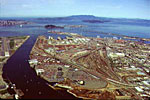
|
Contents
Public Meetings
Project Background
Project Plan
Key Steps in the Planning & Approval Process
Public Trust Issues
Estuary Policy Plan Considerations
Tracking the Project
Community Participation
Ninth Avenue Terminal
University Research on Oak to Ninth
Waterfront Action's Position
Oak to Ninth in the News
Project Status Meter
Update: Construction Progress 2020
Onging: Additional Phase I High-density
residential development is in construction.
Public park opened November 2020.
Formerly known as the
Ninth Avenue
Terminal Park and Shoreline Park, the new park has now been branded
"Township Commons" by the project developer.
View San Jose Mercury drone photos of park.
Orion Apartments completed. The
first residential unit was completed and is leasing.
Update: Project Status October 2018
Developer requests plan revisions. On
October 17, 2018, the City of Oakland Planning Commission will conduct a
scoping session on a Draft Supplemental EIR for modifications to the
Brooklyn Basin Planned Unit Development. The proposed
modifications include a net increase of:
- 600 residential units
- 158 marina slips
- 90,915 sq ft "fill"
- marina slips and and
ramps in front of the "wetlands".
View the
announcement and notice of
preparation. 
Update: Project Status November 2017
Construction at Brooklyn Basin
is ongoing; Planning Commission acting on additional buildings. On
August 2, 2017,
the City of Oakland Planning Commission approved plans for Parcel C in
the Brooklyn Basin complex, an eight-story building which will include
241 residential units and up to 3,500 sq ft. commercial space.
Update: Project Status September 2016
First building at Brooklyn Basin
Approved by Planning Commission. On September 7, 2016,
the City of Oakland Planning Commission approved plans for the Brooklyn
Basin Terraces Apartments, located at 845 Embarcadero, in the Brooklyn
Basin complex.
Detailed drawings are available as
Attachment A to the Commission's September 7, 2016 Agenda Item 5. (
large file)
The start of this building will be good news for
public access because the schedule for Bay Trail implementation at
Brooklyn Basin is tied to the finish of this first building. By its
completion, the applicable permits require construction of the Bay Trail
at the Phase 1 of the project and construction of an interim trail
throughout the remainder of the project.
Update: Project Status May 2016
"Shoreline Park" reviewed by BCDC Design
Review Board. On May 9, 2016, the Design Review Board of
the Bay Conservation and Development Commission reviewed
this revised design
for Shoreline Park and offered feedback. Key revisions are
highlighted on page 10.
Update: Project Status December 2015
Brooklyn Basin "Shoreline Park" Plan
Approved by Planning Commission. The revised final
development plan for Brooklyn Basin Shoreline Park was approved by the
City of Oakland Planning Commission on Wednesday, December 16, 2015.
Einwiller Kuehl Landscape Architecture developed the revised plan, which
replaced the much-criticized earlier plans from Roma Design Group.
Commissioners praised the revised plan's vision and features as well as
the speed with which it was developed.
The revised plan as
submitted is available for download
here (50
MB ).
Shoreline Park is the first park space to be
developed in the project. It includes the footprint of the existing
Ninth Avenue Terminal and adjacent waterfront land. These park areas
were included in the 2002 Measure DD bond language but were removed from
the scope of Measure DD when the Port of Oakland sold the Oak to Ninth
development parcel to Zarsion/ Oakland Harbor Partners.
Update: Project Status March 2014
The Brooklyn Basin project broke ground March 13,
2014. After years of planning, challenges, and financial
uncertainty, the project is underway. The first phase will include
infrastructure development and 1,200 housing units. The start of the
project also triggers public access requirements that will ultimately
close the largest gap in the Bay Trail along the Oakland Estuary.
Weixun Shan, Chairman of Zarsion Holdings Group of
China, the major financier of the project, has expressed a desire to
greatly accelerate the pace of the development. Remarkably, he called
for completion "within three to four years" in a December 13, 2013 East
Bay Express article:
Massive Housing Development Put on Fast Track in Oakland.
Update: Project Status June 2013
As described in this
Port of Oakland press release, on June 10, 2013 , escrow closed on
the Oak to Ninth (aka "Brooklyn Basin") Project.
Public Access Implications:
This event triggered a requirement that the project developer construct
interim Bay Trail segments located at Channel Park and the Ninth Ave.
Terminal. Under conditions imposed by Bay Conservation and Development
Commission Permit 7-06 and the City of Oakland Development Agreement
Exhibit N, these two segments must be completed within one year of the
close of escrow. Between these segments, a wide gap will remain for a
number of years under the terms of the controlling documents.
The permanent Bay Trial will be installed in phases as the project is
built out over a period of about 15 years.
Update: Project Status April 2013
At its April 11th, 2013 meeting, the Port Commission
extended the deadline for close of escrow for Oak to Ninth by one year
and agreed to to amend to the Purchase and Sale Agreement to provide for
this extension. The new escrow deadline is June 14, 2013.
Update: Project Status April 2013
On April 10th, 2013 Signature Development
Group offered the following press release:
-
Signature Development Group of Oakland, CA
and Zarsion Holdings Group Co. Ltd of Beijing have announced their
agreement to co-develop 65 acres of waterfront property on the
Oakland Estuary of San Francisco Bay. The project, called Brooklyn
Basin, will be an economic boon to the city and the region,
representing an asset of more than $1.5 billion dollars at
completion, with 3,100 residential units, approximately 200,000
square feet of retail and commercial space, and a marina with up to
200 boat slips. More than 30 acres have been set aside for
waterfront parks and open space.
The San Francisco Chronicle credited the initial
announcement to Jerry Brown in
Jerry Brown unveils $1.5B Oakland waterfront deal.
The project seems to have been re-branded as "Brooklyn Basin" and the
developer's web site is now at
http://www.brooklynbasin.com/.
Update: Project Status December 2012
At its December 20th, 2012 meeting, the Port
Commission extended the deadline for close of escrow for Oak to Ninth by
90 days and agreed to to amend to the Purchase and Sale Agreement to
provide for this extension and other revisions. The new escrow deadline
is May 1, 2013.
Update: Project Status January 2012
At its January 26th, 2012 meeting, the Port
Commission extended the deadline for close of escrow for Oak to Ninth by
one year and agreed to to amend to the Purchase and Sale Agreement to
provide for this extension. The new escrow deadline is January 31, 2013.
For context, read the Agenda Report
for this item (pdf).
Update: Project Status May 2011
Ending the court battle over the EIR, the California
Court of Appeal affirmed the August 2009 ruling of the California
Superior Court and dismissed the appeal that challenged the EIR
compliance with CEQA.
Update: Project Status January 2011
On January 20, 2011, the San Francisco Bay
Conservation and Development Commission (BCDC) approved the BCDC
staff recommendation to grant a permit subject to certain special
conditions. Among these conditions were an accelerated
implementation of both interim and permanent public access
improvements as described in conditions II-B-4 through II-B-6. In
addition, the conditions also require that the existing train trestle at
the Ninth Avenue Terminal be retained for public access purposes.
Curiously, the BCDC staff recommendation refers to
the project as the "Brooklyn Basin Redevelopment Project."
Update: Project Status June 2010
On June 28, 2010, the California State Lands
Commission approved the trade of Public Trust Lands described in
Chapter 542 of the Statutes of 2004 (SB 1622). This trade
removed the Public Trust from certain lands within the Oak to Ninth
project area and transferred it to certain lands within the former
Oakland Army Base, some distance from the shoreline. The trade was
necessary to allow housing to be built on filled lands owned by the
State of California that were once navigable waterways. These
lands will be sold to Oakland Harbor Partners.
Update: Project Status February 2010
On February 16, 2010, the Board of Port
Commissioners of the Port of Oakland approved the proposed Tidelands
Trust exchange agreement and conducted the public hearing required by
SB1622, as described below. The approved trade removes
approximately 8.28 acres of waterfront land from the Trust and exchanges
it for approximately 6.76 acres of land in the Oakland Army Base area.
This trade is economically favorable for the Port because it had
previously purchased the Army Base property with Trust funds to meet
transportation requirements. In effect, the Oak to Ninth
waterfront land that will be removed from the Trust and sold will be
exchanged for existing Port property.
The hearing and exchange were included in a single
agenda item that also included extensive changes to the purchase
agreement. These changes included an extension of the the deadline
for full payment to 2015, with an option for a further extension in
2015. The changes and their background are detailed in the
nearly
50-page agenda report for item C-1 (pdf).
Update: Project Status August 2009
The California Superior Court and determined that
the revised EIR adequately addressed its deficiencies and was in
compliance with CEQA. The court vacated its order that had
suspended the project's approvals.
Update: Project Status January 2009
In September 2008, the
Revisions to the Analysis in the Oak to Ninth EIR (pdf) ordered by
the court were published. Public comments on the revisions were
accepted until November 17, 2008. Those comments and the City
staff responses to them are published
here (pdf).
On January 20, 2009, the Oakland City Council
adopted a resolution to the approve the EIR revisions and re-adopt the
related EIR certification and CEQA findings. After that step, the
revisions will go before the court.
Update: Project Status March 2008
Following a February 27, 2008 ruling, Judge Lee will
permit the EIR to be revised to correct the specified deficiencies and
brought back to her for approval. Further, she will allow the
City's approvals of the project to stand without a new round of actions
by the Council.
Update: Project Status November 2007
The project's environmental impact report (EIR) has
been found deficient by a California Superior Court, resulting in
invalidation of the Oakland City Council's adoption of that EIR and
related documents. The story was covered on November 23, 2007 in
brief in a
San Francisco Chronicle article and in detail in a
Berkeley Daily Planet article.
The final ruling will not be released until
mid-December 2007, and its impact on the project is not yet clear.
At a minimum, the EIR will need to be revised to satisfy the terms of
the ruling, and all steps in the approval process that depend on the
City's adoption of that EIR will need to be repeated. These may
include action by the Planning Commission and City Council on such
documents as the EIR, General Plan amendments, zoning changes,
development agreement, etc.
There may be a requirement for a new round
of government approvals in public meetings. We will announce
meetings below and in our newsletter as
they are scheduled.
Public Meetings
The proposed Oak to Ninth project will be an item
for discussion or action at the following public meetings:
-
November 7, 2013 3PM, Jack London Aquatic
Center, 115 Embarcadero, Oakland:
public outreach meeting to introduce Phase 1 design & schedule.
-
February 27, 2006 6PM, City Hall:
Landmarks Preservation Board
-
March 2, 2006 7PM, City Hall:
League of Women Voters Forum
-
March 15, 2006 6:30PM, City Hall:
Planning Commission (action-
approval)
-
March 28, 2006 6:30PM, City Hall:
City Council Workshop on Oak-9th
-
April 10, 2006 6:30PM, San Francisco:
BCDC Design Review Board on Oak-9th
(action delayed)
-
June 20, 2006 City Hall:
City Council
(action- approval)
-
July 10 or Aug 7 2006 (Date TBD), 6:30PM, San Francisco:
BCDC Design Review Board on Oak-9th
(third hearing)
-
January 20, 2009 7PM, City Hall:
Council Hearing on EIR Revisions
top^
 Project Background Project Background
The Ninth Avenue Terminal, originally built in the
late 1920's and added to in the 1950s, was designed for break-bulk cargo
(cargo that cannot be moved in a container). Historically, much of the
Port of Oakland's cargo was break-bulk, but today, less than 5% arrives
on a break-bulk ship.
Noting that the need for the Ninth Avenue Terminal as a break bulk site
had diminished significantly, the Port of Oakland worked with BCDC to
determine if the Port Priority Use designation could be removed from 9th
Avenue Terminal area. BCDC agreed and removed this designation,
which was one of a number of changes that enabled the Port of Oakland to enter into a contract with Oakland
Harbor Partners (Signature Properties and Reynolds and Brown) for sale
of the roughly 64 acres of land involved in the proposed project.
The project area falls within the scope of the
Estuary Policy Plan, which specifies land
use objectives for the entire area.
The area also includes lands designated as part of
the public trust, with resulting constraints on
uses of those lands.
top^
Project Plan
Overview
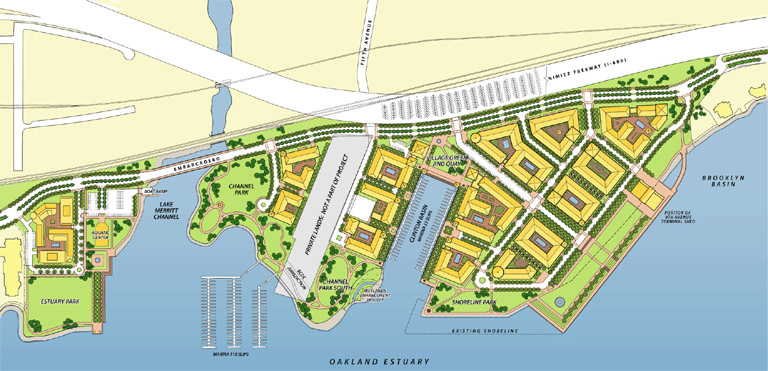
Oakland harbor Partners has proposed a project for
the 64 acres of waterfront property that would include up to 3,100
residential units, 200,000 square feet of ground-floor commercial space,
3,500 structured parking spaces and approximately 27 acres of public
open space, two renovated marinas and a wetlands restoration area:
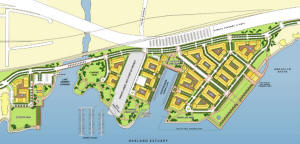
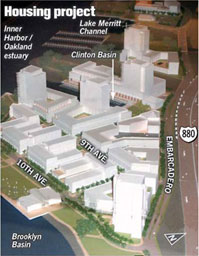
The majority of the buildings of the proposed
project are under 8 stories tall, but the proposal includes several
high-rise towers ranging from 20 to 24 stories. Most of the Ninth Avenue
Terminal building would be demolished and replaced by park area, though
about 9% of this historic structure would be preserved.
Public parks and open space are planned along the
water's edge.
Although the Fifth Avenue site lies within the
project boundaries, it is not part of the planned project.
Construction is planned in phases over a period of
approximately seventeen years, as shown on the 3/15/2006
Phasing Plan and
Phasing Plan diagram.
Further Information
Following the dissolution of CEDA, the City posted
many documents related to the project on its
Oak to Ninth Mixed Use Development page.
Oakland Harbor Partners have introduced an
informative website
describing the project.
Detailed views of the site plan are are shown on the
December 2005
Preliminary Development Plan. (6MB) This
document is particularly useful, providing diagrams of proposed building
masses, view corridors, and shoreline reconfiguration. In December 2005, City staff recommended that
portions of the site plan be redesigned, as described in
this staff report and as shown on
the related diagrams.
top^
Key Steps in the Planning & Approval Process
Environmental Impact Report- Complete, but
court action pending
The issue: An Environmental Impact Report (EIR) is
required under the California Environmental Quality Act (CEQA).
Key steps & status:
-
EIR Notice of Preparation (NOP) comment period
ended 6/30/2004. Waterfront Action sent a
comment letter.
Status: Complete
-
Draft EIR Published 9/1/2005.
Copy available here. (62MB
)
Status: Complete
-
Draft EIR Review Period 9/1/2005 - 10/24/2005
Waterfront Action sent a comment letter.
Status: Complete.
-
Final EIR Published 2/1/2006.
Copy available here. (30MB
)
Status: Complete
-
Final EIR Certified by Planning Commission
3/15/2006
Status: Complete
-
Final EIR Certified by City Council 6/20/2006.
Status: Council certification set aside by order of Alameda
Superior Court due to a finding of certain deficiencies in the EIR.
-
Revisions to the Analysis for the EIR released
9/30/2008
Copy available here. (9MB
)
Comment period ends 11/17/2008.
-
EIR revisions approved and
related EIR certification re-adopted by City Council 1/20/2009
Status: Complete; Court action on revised EIR pending...
Amendments to City of Oakland General Plan,
Estuary Policy Plan section - Complete
The issue: The Estuary Policy Plan
called for parks, open space, mixed use commercial businesses and a hotel in the Oak to Ninth area,
as no housing can be built on Public Trust lands. Therefore the proposed
project could not proceed until the City Council adopted
amendments to the General Plan permitting private housing on the site. (Details)
Key steps & status:
BCDC Approval - Complete
The issue: Under the provisions of the
McAteer-Petris Act, the San Francisco Bay Conservation and Development
Commission has jurisdiction over those lands immediately fronting on the
Bay. The Commission imposes certain requirements on projects in
these areas and grants approval when the requirements are met.
Key steps & status:
-
BCDC Design Review Board action (staff
report)
Status: No Position
-
Commission action (staff
recommendation)
Status: Complete. Approved 1/20/2011 subject to
special conditions specified in staff recommendation.
Trade of Public Trust Lands - Complete
The issue: The Public Trust Lands in the Oak to Ninth area
cannot be used for housing, so the Port intends to remove the trust
restrictions from these areas through a land exchange. (Details)
Key steps & status:
-
SB1622 language providing for the land exchange
carried by Senator Perata
Status: Legislation signed into law 9/15/2004
-
Lands to be traded must be identified by Port.
Status: Complete
-
The Port must hold at least one public hearing
regarding the proposed land trade.
Status: Completed 2/16/2010
-
Proposed trade must be approved by California
State Lands Commission.
Status: Complete. Approved 6/28/2010
top^
Public Trust Issues
Under the provisions of the California State
constitution, the Public Trust lands now located within the planned Oak
to Ninth project cannot be used for housing and other non-trust uses.
The project property includes over 75%
Public Trust land, so the Port arranged for Senator Perata
to carry
legislation
(SB 1622) to trade the "after acquired" Public Trust lands within
the Oak to Ninth area for another site in Oakland of equal or higher
value. The bill was approved by the Governor September 15, 2004 (bill
history).
WAI Action. Waterfront Action believes
strongly in the importance of public process in any consideration of
public trust trades, and we want to make sure that any trade preserves
public access to the region's waterfront. With the assistance of a
number of other non-profit organizations (Oakland Heritage Alliance and
California Sierra Club) and staff support of Rachel Richmond (Wilma
Chan's office) and Gareth Elliott (Senator Perata's Sacramento office),
we were successful in amending the legislation in Sections 4 and 7 of
SB1622 to include the following language which is intended to insure
public access and public process (additions are underlined):
Section 4: (h) the final trust lands will provide
vertical access from the public streets to the shoreline and continuous
lateral public access consistent with policies OAK-9 (Improve the
Embarcadero east of Oak Street as a multimodal landscaped parkway with
bicycle, pedestrian and vehicular facilities.) , OAK-10 (Create a
network of pedestrian-friendly streets that opens up views and access to
the water.), OAK-11 (Design parking to be convenient and
complementary to the public orientation of uses within the area.) and OAK-12 (Establish a management program for special events access and
parking.) of the Estuary plan in effect on June 1, 2004 for the Oak
to 9th Avenue property to the water along the entirety of the Oak
Street to 9th Avenue property.
In addition, we added language to require a public
hearing:
Section 7: (b) (12) the port has approved the exchange
after holding at least one public hearing.
Finally, SB1622 requires that the California State
Lands Commission determine that the Oak to 9th land to be traded is no
longer needed for any public trust purpose:
Section 3: (e) As described below, the Oak
Street to 9th Avenue exchange lands are, subject to the findings of
the commission required by this act, no longer needed or required
for the promotion of the public trust or any of the purposes set
forth in the Oak Street to 9th Avenue legislative grants.
top^
Estuary Policy Plan
Considerations
The Estuary Policy Plan,
which was adopted by the City Council in 1999 as part of the City's
General Plan, called for parks and open space in the Oak to Ninth area:
"Public space is planned to be the primary new
use within the Oak-to-Ninth District, occupying all of the land
along the shoreline and extending inland at Lake Merritt Channel,
Clinton Basin, and a new ‘Crescent Park’. (See Policy OAK-2.4).
Recreational use of the shoreline will be the most significant agent
of change within the district. It will create a series of
extraordinary amenities and recreational resources for the
community, as well as an attractive setting for new and existing
development. Within the larger framework of a major waterfront open
space system, development should be guided by the following
policies: POLICY OAK-4: PROVIDE FOR LIVELY, PUBLICLY ORIENTED
ACTIVITIES THAT COMPLEMENT THE ADJACENT WATERFRONT PARKS AND OPEN
SPACES."
(p. 92)
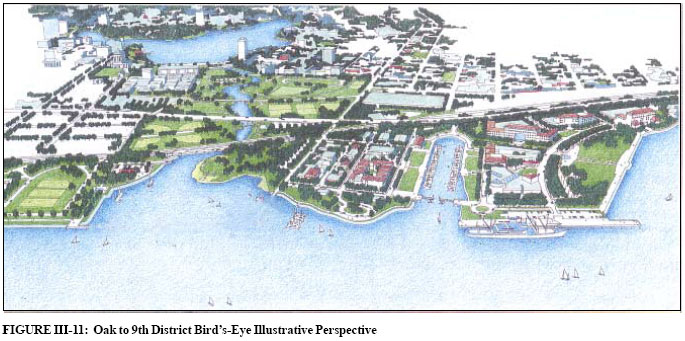
Figure III-11 (p. 89) of the Estuary Policy Plan
depicts the land use envisioned for Oak to Ninth:
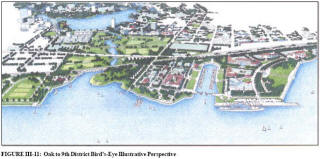
Note that although the historic Ninth Avenue
Terminal is not shown in the above graphic, the text page 91 of the Plan
suggests the terminal's potential role in the area.
Before the proposed project could proceed, the City Council
needed to adopt
amendments to the General Plan permitting private housing in place of
some of the planned public areas.
On March 15, 2006, the Planning Commission approved
a
set of amendments to the General Plan for recommendation to the City
Council, and Council adopted them on June 20, 2006.
As an example, the amendments concerning
land use deleted the following language:
"Public space is planned to be the primary new
use within the Oak-to-Ninth District, occupying all of the land
along the shoreline and extending inland at Lake Merritt Channel,
Clinton Basin, and a new ‘Crescent Park.’ (See Policy OAK-2.4)."
Instead they inserted the following language:
"A mix of land uses can be accommodated within
the Oak-to-Ninth District, including open space, recreation,
commercial, civic uses, marinas, and, as designated in the PWD-4
land use classification, residential development."
top^
Tracking the Project
The City of Oakland hosts an
Oak to Ninth webpage listing steps related to CEQA Review, EIR Scoping, Draft EIR
Report preparation, and public outreach.
top^
Community Participation
The City has provided
this Q&A document covering frequently asked questions about community
participation in the Oak to Ninth Mixed Use Development Plan.
 On
February 1, 2, and 3, of 2005, the City of Oakland hosted small group
interviews to obtain input on the project. Then on March 30 and April 9, 2005, the City hosted two open house community meetings
regarding Oak to Ninth. More> On
February 1, 2, and 3, of 2005, the City of Oakland hosted small group
interviews to obtain input on the project. Then on March 30 and April 9, 2005, the City hosted two open house community meetings
regarding Oak to Ninth. More>
Input from these community meetings is documented in
the
May 2005 Summary Report
prepared by CirclePoint. The
executive summary provides useful highlights of the 13-page report,
which identifies issues and suggested improvements to the project.
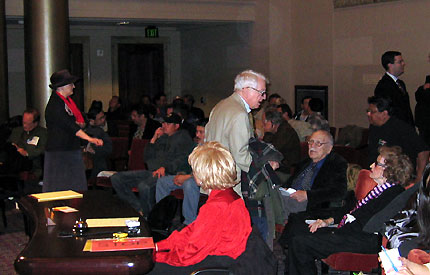 On March 2, 2006, the League of Women Voters of
Oakland held a public forum on the
proposed Oak to Ninth Avenue Development.
More> On March 2, 2006, the League of Women Voters of
Oakland held a public forum on the
proposed Oak to Ninth Avenue Development.
More>
top^
Ninth Avenue Terminal
From the early stages of planning,
controversy arose concerning the disposition of the Ninth Avenue
Terminal, a break-bulk shipping facility with historic roots, but
limited beauty. In response to a request for proposals from the
City, Placeworks LLC has submitted
a proposal for a "Vintner's Hall", to be used by wineries of the the
East Bay Vintners' Alliance,
and to include a restaurant and water-oriented recreational retail
facility. The proposal background and concept are presented on the
Ninth Avenue Terminal
Partners web site.
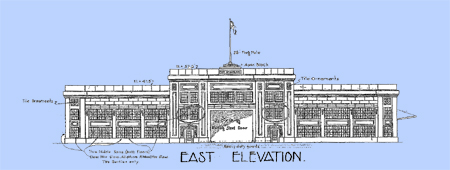
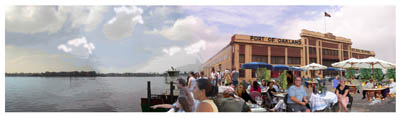
The developer presented his approach
and plan at a well-attended recent Waterfront Action meeting. More about the
proposal is presented in the San Francisco Chronicle article:
Historic port terminal may get elaborate makeover into winery.
top^
University Research on Oak to
Ninth
The Oak to 9th project has been the subject of
pioneering research conducted by the U.C. Berkeley Health Impact Group,
which includes graduate students and faculty from the U.C. Berkeley
School of Public Health. The research aimed to understand how the
project might best contribute to community health assets, whether the
project might lead to adverse health impacts, and how the project can be
improved in a way that best protects and promotes health. On March
15, 2006, the researchers presented a
report focused on traffic safety to the Oakland Planning Commission.
The group presented its priority
recommendations for health promotion to City Council on March 28,
2006, and a
final report of its
full findings is available has been published. (all reports are
)
top^
Waterfront Action's
Position on Oak to Ninth District Development
Four points define the position we
advanced prior to project approval by the City Council:
 Support mixed-use development. Support mixed-use development.
Seek improvements to the proposed project.
Support the Estuary Policy Plan.
Respect the Public Trust.
The details and rationale for these
points are presented in our full position statement.
Now that the Council has approved the
project plan, EIR, and development agreement, we:
Continue to support mixed-use development.
Seek improvements in the implementation of the project.
Support the Estuary Policy Plan as revised by the Council.
Continue respect for the Public Trust.
top^
Oak to Ninth in the News
 Infrastructure
work starts on Oakland's biggest active project June 9, 2015,
San Francisco Business Times Infrastructure
work starts on Oakland's biggest active project June 9, 2015,
San Francisco Business Times
Mega-development
getting underway along the Oakland Estuary March 13,
2014, Oakland Tribune
Massive
Housing Development Put on Fast Track in Oakland December
13, 2013, East Bay Express
Jerry Brown unveils $1.5B Oakland waterfront deal
April 11, 2013, San Francisco Chronicle
Judge
rules Oak-to-Ninth project environmental review inadequate
November 23, 2007, San Francisco Chronicle
Judge
Throws Out Oak-to-9th Plan EIR November 23, 2007,
Berkeley Daily Planet
Vintner's
Plan Ages Well May 18, 2007, Oakland
Tribune
Ninth
Avenue Terminal: Wine's haven? April 1, 2007, Oakland
Tribune
Historic
port terminal may get elaborate makeover into winery March
16, 2007, San Francisco Chronicle
Massive
waterfront project approved July 19, 2006, Oakland
Tribune
Oakland
Greenlights Oak to Ninth June 22, 2006, Oakland
Tribune
City
Council backs vast estuary project June 22, 2006, San
Francisco Chronicle
Oak
to Ninth heading to council vote June 22, 2006, Oakland
Tribune
Oak
to 9th Ave: Lessons for Democratic Community Planning April 9,
2006, Jack London News
Huge
Oakland housing project criticized April 9, 2006, Oakland
Tribune
Oakland
Council Looks at Giant Waterfront Project March 31, 2006,
Berkeley Daily Planet
Mini-city
plan draws a big council crowd: Hundreds weigh in on Oak to Ninth
proposal March 29, 2006, Oakland
Tribune
Let's
vote on huge housing project March 23, 2006, Oakland
Tribune
Planners
put faith in mini-city March 17, 2006, Oakland
Tribune
Mini-city
will face critics, planners March 15, 2006, Oakland
Tribune
Fighting
over the soul of Oakland waterfront: Vast housing plan raises issues of
affordability, access Nov 30, 2005, San Francisco Chronicle
Commission
to weigh Oak to Ninth plan September 25, 2005, Oakland
Tribune
Activists
confront waterfront developer March 31, 2005, Oakland
Tribune
Terminal's
status leads to debate May 31, 2004, Oakland
Tribune
Port
of Oakland's Board Approves Sale of 60-Acre Waterfront Parcel for
Development September 4, 2003 press release, Port of
Oakland
Oakland
port OKs selling waterfront land September 3, 2003, San Francisco Chronicle
Port
of Oakland Selects Master Developer for Extraordinary Waterfront
Opportunity September 4, 2001 Press release, Port of Oakland
top^
Project Status Meter
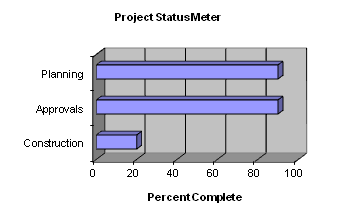
Here is Waterfront Action's estimate of progress on
the project:
top^
|